
Quick Answer
The cost of dental implants in the UK varies depending on your clinical needs, the number of missing teeth, and whether preparatory treatments like bone grafting are required. A single dental implant usually includes the surgical placement, the titanium post, the connecting abutment, and the final custom-made crown. Because each patient’s jawbone density and oral health differ, the only way to get a completely accurate, transparent cost of dental implants in Solihull is through a professional clinical consultation. Always ensure your quote outlines every stage of the journey, from initial planning to your final restoration.
How Much Do Dental Implants Cost in Solihull?
When researching tooth replacement, one of the most common questions patients ask is about the cost of dental implants. It is completely natural to want a straightforward price list before committing to treatment. However, unlike purchasing a standard product, a dental implant is a complex, highly personalised medical procedure.
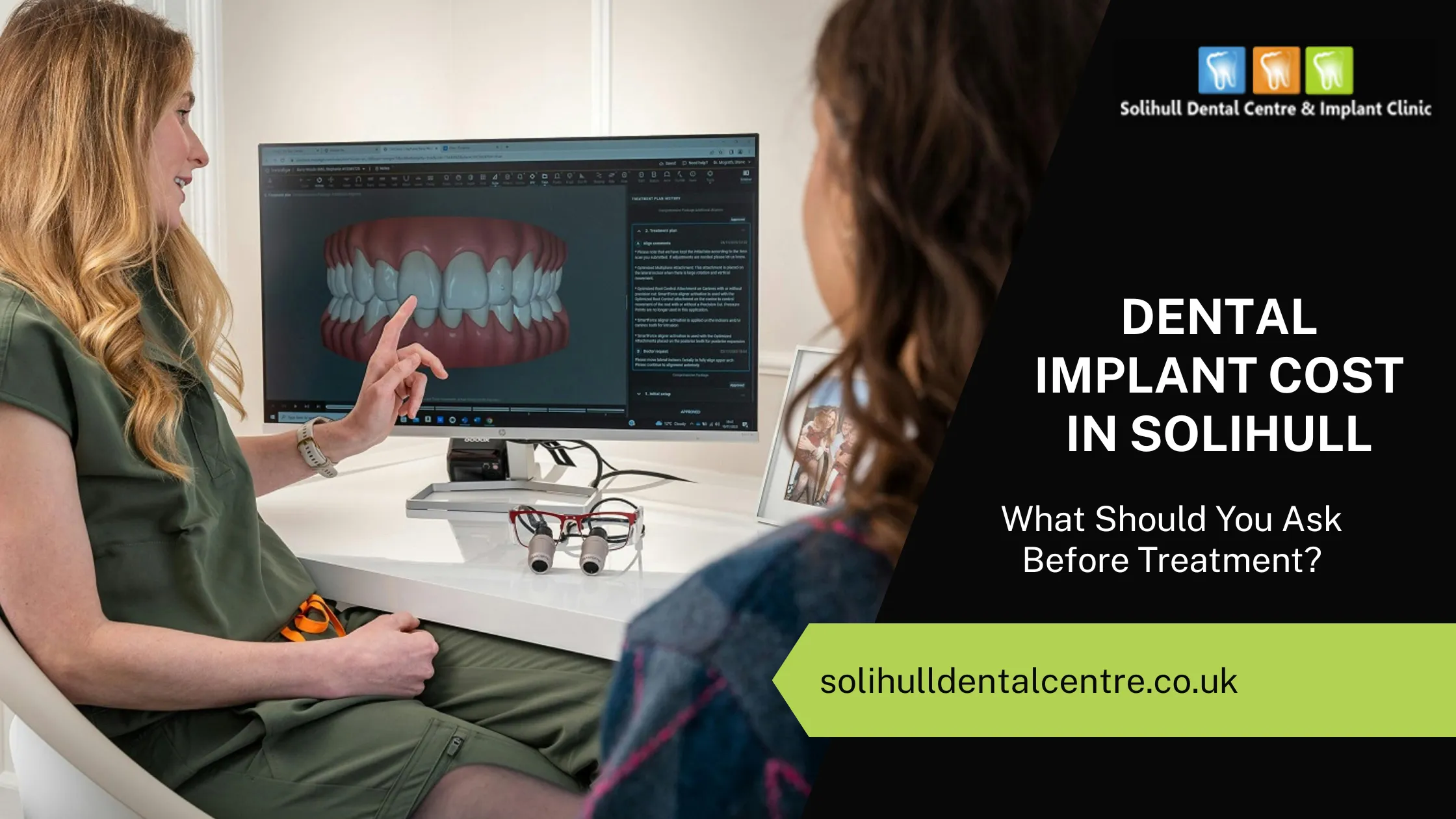
While you can often find average UK prices online, the exact cost for your smile will depend on a detailed clinical assessment. The price of replacing a single missing tooth will naturally be lower than stabilising a full lower denture or replacing an entire arch of teeth. Rather than looking for the cheapest option, it is crucial to look for transparency. A reputable implant dentist will always provide a fully costed, written treatment plan after examining your mouth, taking 3D scans, and discussing your desired outcomes. This ensures you know exactly what your investment will be before any treatment begins, with no hidden surprises along the way.
Why Do Dental Implant Prices Vary So Much?
If you have been looking at teeth implants UK prices, you have likely noticed a wide variation in the fees quoted by different clinics. This price difference comes down to several critical factors that affect the quality, safety, and longevity of your treatment.
Firstly, the experience and postgraduate training of the implant surgeon play a massive role. Placing an implant requires immense precision, and highly skilled dentists invest heavily in continuous education to ensure they provide the best possible clinical outcomes. Secondly, the materials matter. Premium titanium implants and high-grade restorative materials (like zirconia crowns) cost more to manufacture but offer superior durability, biocompatibility, and aesthetics.
Furthermore, the technology used by the clinic influences the price. Practices equipped with cutting-edge 3D CBCT scanners and digital planning software can place implants with pinpoint accuracy, leading to safer procedures and faster healing times. Finally, the complexity of your specific case will adjust the fee. If you have suffered from bone loss due to missing teeth for a long time, you may require additional preparatory work to ensure the implant has a solid foundation.
What Is Usually Included in a Dental Implant Quote?
When comparing tooth implant cost UK options, it is vital to check exactly what is included in the figure you have been given. Some clinics advertise a very low initial price, only for patients to discover later that the quote did not include the abutment or the final crown.
A comprehensive, trustworthy quote for full mouth dental implants should include:
- The Planning Phase: This covers your initial assessments, digital impressions, X-rays, and 3D CBCT scans used to map out your jawbone.
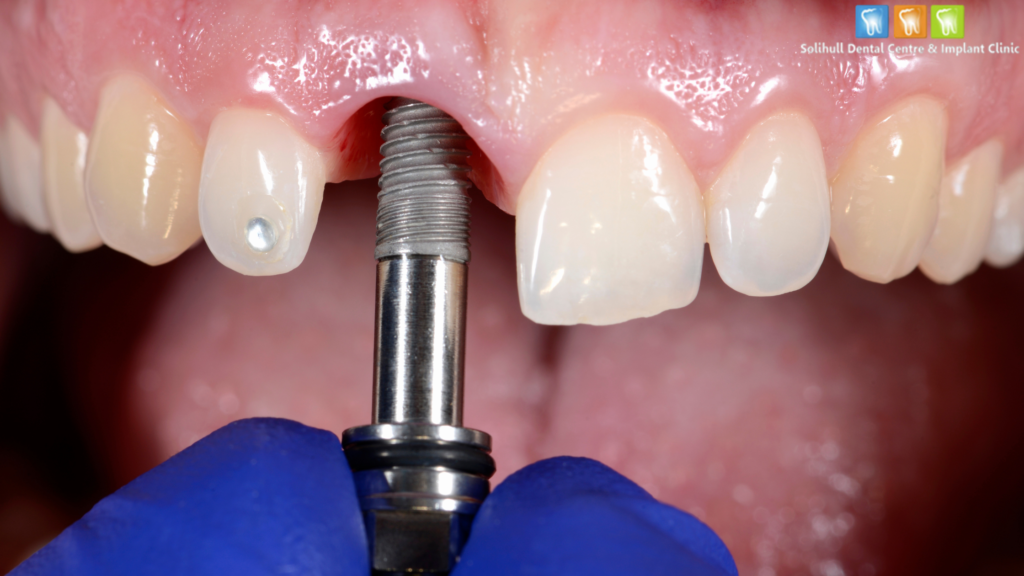
- The Implant Fixture: The physical titanium screw that is gently placed into your jawbone to act as an artificial root.
- The Abutment: The small connecting piece that securely links the implant in the bone to the replacement tooth above the gum line.
- The Final Restoration: The bespoke porcelain or zirconia crown, bridge, or denture that is crafted by a master dental technician to blend perfectly with your natural teeth.
- Follow-Up Care: Post-surgical reviews and the time needed to monitor your healing.
Always ask your dentist to confirm that the quote you are reading covers the complete journey from start to finish.
Single Tooth, Multiple Teeth or Full Mouth Implants: Which Option Do You Need?
Dental implants are incredibly versatile and can be tailored to solve almost any degree of tooth loss. The treatment you need will directly dictate the final cost and timeframe.
Single Tooth Replacement: If you have lost one tooth to trauma or decay, a single implant topped with a bespoke crown is the gold standard. It replaces the tooth without requiring the filing down of healthy neighbouring teeth, which is necessary for a traditional bridge.
Multiple Missing Teeth: If you are missing three or four teeth in a row, you do not necessarily need an implant for every missing tooth. An implant-supported bridge can be used, where two implants are placed at either end of the gap to support a multi-tooth restoration firmly.
Full-Mouth Dental Implants: For patients who have lost all their teeth or are struggling with loose, uncomfortable dentures, full-arch rehabilitation can be life-changing. Techniques often referred to as “teeth in a day” or full-mouth implant-supported bridges can permanently secure a complete set of upper or lower teeth. In most cases, a full-mouth rehabilitation can be done using just four to six strategically placed implants. Alternatively, implants can be used simply to click and lock a removable denture firmly into place, eliminating the need for messy denture adhesives.
What Actually Happens During the Dental Implant Process?
Understanding the journey can help alleviate any anxiety you may have about the dental implant procedure. The dental implant process is carefully staged to ensure maximum safety and long-term success.
- Consultation and Scans: Your dentist will thoroughly examine your gums and jawbone. They will also take 3D scans to precisely plan the angle and depth of the implant.
- Implant Placement: Under local anaesthetic, the titanium implant is carefully placed into the jawbone. The procedure is precise and highly controlled.
- The Healing Phase (Osseointegration): Over the next three to six months, a remarkable biological process occurs. Your natural bone will grow and fuse directly to the surface of the titanium implant, locking it solidly into place.
- Attaching the Abutment and Crown: Once the implant has fully integrated and is strong enough to handle biting forces, custom impressions are taken. Your permanent, natural-looking crown or bridge is then securely attached, completing your smile.
Do Dental Implants Hurt?
One of the biggest concerns patients have is whether the implant procedure will be painful. The reality is often far more comfortable than people expect. The placement of the implant is carried out under local anaesthetic, meaning the area is completely numb. You will feel some pressure or vibration during the procedure, but you should not feel any sharp pain.
In the days following the placement, the anaesthetic effect will gradually wear off. It is entirely normal to experience some mild swelling, bruising, and tenderness around the surgical site. However, this is usually well-managed with standard over-the-counter painkillers like paracetamol or ibuprofen. Most patients find that they can return to work and their normal daily activities within a day or two. Don’t worry If you are a particularly nervous patient. Many modern clinics offer dental sedation to help you feel completely relaxed and unaware of the treatment as it happens.
Will You Need a Bone Graft Before Dental Implants?
When a tooth is extracted or lost, the jawbone in that area begins to degrade rapidly. Over time, the body begins to resorb (shrink) the bone. If your tooth has been missing for several years, or if you had a severe gum infection, you might not have enough healthy bone volume left to safely anchor an implant.
If your 3D scans reveal insufficient bone density, your dentist may recommend a dental bone graft. This involves placing specialised bone grafting material into the area to encourage your body to regenerate new, strong bone. This may add a step and some cost to the overall process. However, it is an essential procedure for ensuring the long-term stability and success of your dental implant.
How Long Does Dental Implant Treatment Take?
Patience is key when it comes to dental implants. The actual surgical placement of a single implant might only take an hour or two. However, the entire biological journey usually takes between three and nine months from start to finish.
The longest part of the process is waiting for osseointegration—the period where the bone fuses to the implant. This typically takes three to six months. Sometimes, patients may require a bone graft or a sinus lift before the implant can be placed. In this case, you will need to add several months of healing time to your treatment plan. Rushing the process increases the risk of implant failure, so a cautious, biology-led approach is always best. During this waiting period, your dentist can usually provide a temporary cosmetic solution. This is to ensure that you are never left with a visible gap in your smile.
Dental Implants vs Dentures and Bridges: What Should You Compare?
When weighing up the costs, it is important to consider the long-term value of implants compared to traditional alternatives.
Removable dentures are typically the cheapest initial option, but they can be uncomfortable, may slip when eating or speaking, and often require replacing every five to seven years as the jawbone shape changes. Traditional dental bridges are fixed and aesthetic, but they require the irreversible filing down of healthy adjacent teeth to act as supports. Furthermore, neither dentures nor bridges prevents the jawbone from shrinking over time.
Dental implants are the only restoration that mimics a natural tooth root. By stimulating the jawbone, they halt bone loss and preserve your facial structure. While the upfront investment is higher, dental implants are designed to be a permanent, long-lasting solution, making them highly cost-effective over a lifetime.
How Do You Look After Dental Implants Long Term?
If you are investing in your smile, you will want to know how long dental implants last. The implant post itself can easily last a lifetime if cared for correctly. The crown or bridge attached to it is subject to daily wear and tear and may eventually need replacing after 10 to 15 years, much like a natural tooth would.
Looking after an implant is remarkably similar to looking after natural teeth. You must brush twice a day, floss or use interdental brushes daily, and maintain a diet low in sugar. The biggest threat to a dental implant is a condition called peri-implantitis, which is an inflammatory gum disease caused by poor oral hygiene. To prevent this, attending regular check-ups with your dentist and routine appointments with your dental hygienist is essential. Smoking also drastically reduces the lifespan of implants and hinders the healing process, so quitting is highly recommended. For further independent guidance on oral hygiene with implants, you can visit the Oral Health Foundation.
What Questions Should You Ask at Your Dental Implant Consultation?
Your initial consultation is your opportunity to interview the dentist and ensure you feel completely confident in their care. The General Dental Council (GDC) advises patients to make informed decisions about their treatment. To do this, consider asking the following questions:
- What is your experience and postgraduate training in implant dentistry?
- Which brand of implants do you use, and why?
- Can I see before-and-after photos of similar cases you have treated?
- What are the specific risks or potential complications for my individual case?
- Is the quote you have provided fixed, or could the price change once treatment begins?
- What happens if the implant fails to integrate?
A trustworthy clinician will welcome these questions and take the time to answer them transparently.
Frequently Asked Questions
Are dental implants available on the NHS?
Generally, dental implants are only available on the NHS in very rare, exceptional medical circumstances, such as patients who have had oral cancer or suffered severe facial trauma. For the vast majority of patients seeking to replace missing teeth, implants are provided on a private basis.
Can I get dental implants if I have gum disease?
Active gum disease (periodontitis) must be fully treated and stabilised before you can be considered for dental implants. Placing an implant into infected gums carries a very high risk of failure. Your dentist will work with you to improve your gum health first.
Am I too old for dental implants?
There is no upper age limit for dental implant treatment. Suitability is based on your general health, bone density, and ability to heal, rather than your chronological age. Many patients in their 70s, 80s, and beyond successfully undergo implant treatment to improve their quality of life.
Is it safe to travel abroad for cheaper dental implants?
While the initial prices abroad can seem appealing, dental tourism carries significant risks. Treatment is often rushed to fit within a holiday window, which violates standard healing protocols. If complications arise once you return to the UK, it can be very difficult and expensive to find a local dentist willing to correct remedial work performed by overseas clinics.
Can my body reject a dental implant?
Unlike organ transplants, dental implants are made of biocompatible titanium, so true allergic “rejection” is exceptionally rare. When an implant fails, it is usually due to infection (poor oral hygiene), smoking, or the bone failing to fuse properly during the healing phase.
Book Your Dental Implant Consultation in Solihull
If you are tired of struggling with missing teeth, failing crowns, or loose dentures, permanent tooth replacement could change your life. Understanding the process and your individual options is the first step toward restoring your confidence. If you are considering dental implants in Solihull, Solihull Dental Centre & Implant Clinic can help you understand your options, costs, and treatment journey. Claim your free Dental Implant Consultation today to discuss whether dental implants may be suitable for you and receive a fully transparent, tailored treatment plan.